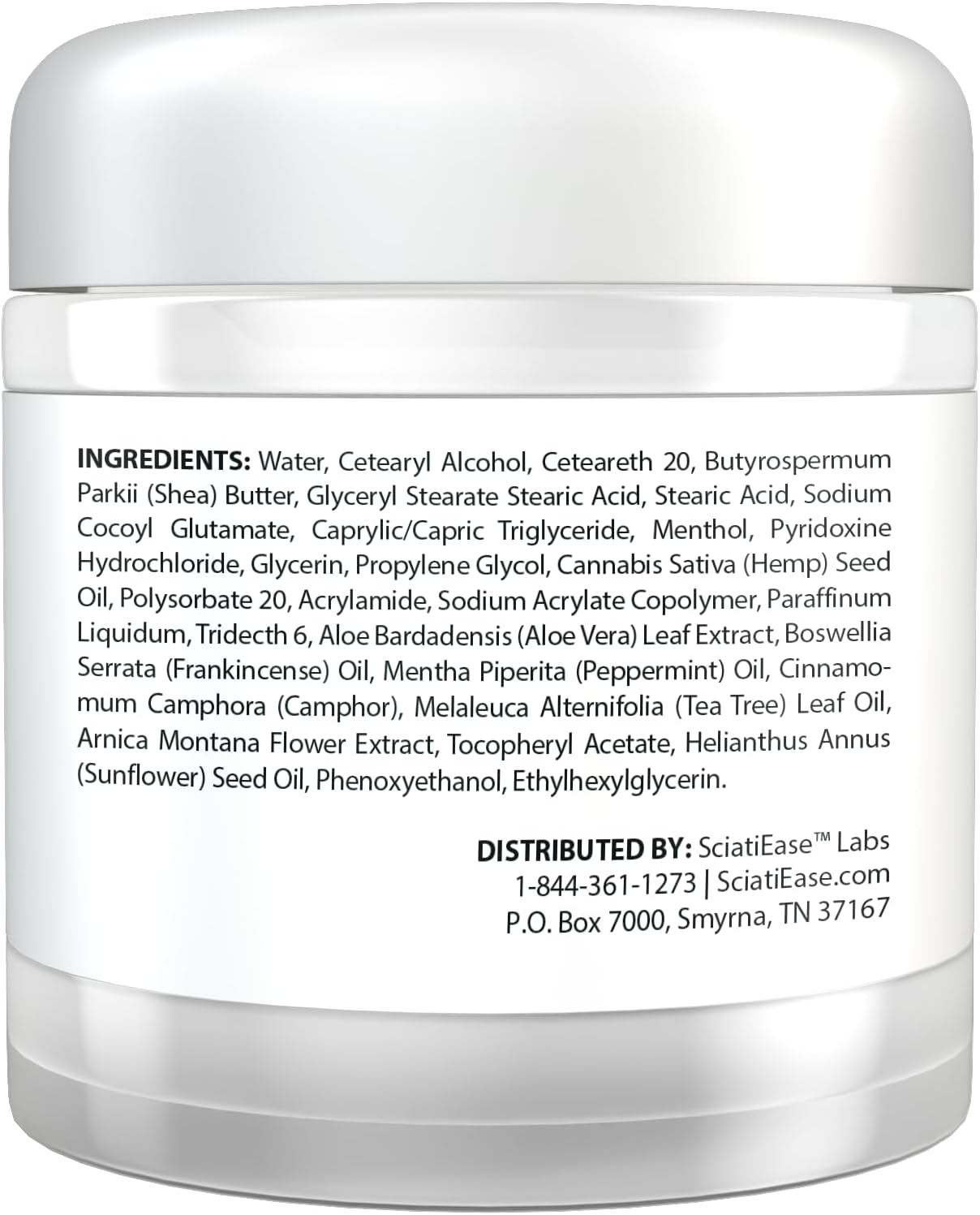
You picked up a jar of something called “Advanced Botanical Relief Cream” and it lists hemp seed oil, comfrey extract, willow bark, and MSM right there on the front panel — all words that sound serious and science-adjacent. But what does any of that actually do, and how much of it is in there? Those are the two questions that determine whether you’re buying a functional topical or an expensive moisturizer with a story. Topical just means applied directly to the skin, as opposed to swallowed. The four ingredients named above are each legitimate compounds with documented mechanisms — but they are not interchangeable, they do not all have the same evidence base, and the gap between a well-formulated product and a label-washing exercise is enormous. This guide strips away the marketing layer and gives you the decision framework: what each ingredient does, what concentration matters, what format fits what use case, and when none of this is the right call at all.
| EDITOR'S PICKPenetrex Joint & Muscle Care -… | Mid-tier[Hemp Cream - Maximum Strength -…](https://www.amazon.com/dp/B0BFFZXJDF?tag=greenflower20-20) | Budget pickPenetrex Daily Joint & Muscle C… | |
|---|---|---|---|
| Active ingredients | Arnica, Vitamin B6, MSM, Boswellia | Hemp oil, MSM, Glucosamine, Arnica, Turmeric | Arnica, Vitamin B6, MSM |
| Size | 4 oz | 3.9 oz | — |
| Greasy feel | ✓ | — | ✓ |
| Formulation | Cream | Gel rub | Cream |
| Absorption speed | — | — | ✓ |
| Price | $32.99 | $19.99 | $18.99 |
| See on Amazon → | See on Amazon → | See on Amazon → |
What Each Ingredient Actually Does (and What It Doesn’t)
Hemp — CBD vs. Hemp Seed Oil vs. Broad Spectrum
This is the most consequential label distinction in the entire botanical topical category, and brands routinely exploit it.
Hemp seed oil is pressed from hemp seeds. It contains no meaningful cannabidiol (CBD) — the compound with documented anti-inflammatory receptor activity. It is a carrier oil, rich in linoleic acid, with real but modest skin-barrier benefits. It is not a pain-relief ingredient. A product featuring “hemp” or a hemp leaf on the packaging but listing hemp seed oil in the ingredients is using imagery to imply a pharmacological effect the formulation does not deliver.
CBD (cannabidiol) is extracted from hemp flowers and stalks. It interacts with CB1 and CB2 receptors in peripheral tissue and has shown anti-inflammatory and analgesic signal in cell and animal studies. The clinical picture in humans is less settled — the FDA’s regulatory overview of cannabis-derived products (FDA.gov, updated 2024) notes that no topical CBD product has received FDA approval as a drug, and the agency has flagged labeling concerns across the category. That said, peer-reviewed reviews published via NCBI PubMed consistently find CBD topicals plausible for localized inflammation modulation at concentrations of 250 mg per fluid ounce or above in the finished product. Below that threshold, you are in skincare territory, not therapeutic territory.
Broad-spectrum or full-spectrum extracts retain additional terpenes and minor cannabinoids; the “entourage effect” hypothesis suggests these may enhance CBD’s activity, though robust topical-specific human trial data remains limited as of mid-2026.
The label read: Look for milligrams of CBD per container and calculate mg per fluid ounce yourself. A 2 fl oz jar with 100 mg total = 50 mg/fl oz. That is a skincare product. A 2 fl oz jar with 500 mg = 250 mg/fl oz. That is in the range where therapeutic claims have at least some mechanistic footing.
Comfrey — Legitimate Efficacy, Real Safety Constraint
Comfrey (Symphytum officinale) root extract is one of the better-evidenced botanicals in this category. The active compound is allantoin, which promotes cell proliferation and has documented wound-healing and anti-inflammatory properties. A randomized controlled trial published in Phytomedicine (Grube et al., 2007, indexed on NCBI PubMed) found comfrey root extract ointment non-inferior to diclofenac gel for acute ankle sprains — a finding strong enough that it anchors the European regulatory dossier for the ingredient.
The complication: comfrey contains pyrrolizidine alkaloids (PAs), which are hepatotoxic (toxic to the liver) when ingested and potentially mutagenic with long-term skin absorption. The European Medicines Agency’s assessment report on willow bark and related herbals notes the PA concern explicitly for comfrey, and the National Center for Complementary and Integrative Health (NCCIH) monograph on comfrey advises against use on broken skin, near mucous membranes, or for longer than ten consecutive days.
The label read: Look for “PA-free” or “low-PA” designation — reputable manufacturers using German pharmaceutical-grade comfrey root extract process to reduce alkaloid content to below 100 ppm. If the label does not mention PA status, you cannot assume it has been addressed. Also verify the listed compound: allantoin as a standalone synthetic ingredient is safe and lacks the PA concern entirely, but it is not the same as a full comfrey root extract and will not carry the same profile of activity.
Format implication: Comfrey is best suited to muscle and joint applications on intact skin for short-course use. It does not belong in wound-care or on compromised skin barriers. Clinic-side buyers managing wound care should keep comfrey products categorically separate from wound-care inventory to avoid application errors.
Willow Bark — The Salicylate Source, Not the Salicylate
Willow bark (Salix species cortex) contains salicin, a precursor compound that the body converts to salicylic acid after systemic absorption. This conversion pathway matters: topically applied willow bark extract does not deliver salicylic acid to tissue at concentrations comparable to pharmaceutical topical salicylate products. The European Medicines Agency’s assessment report on Salicis cortex (willow bark) is clear that the evidence base for willow bark is primarily oral, not topical, with the oral anti-inflammatory dose standardized to 120–240 mg salicin daily.
What willow bark does contribute topically: mild astringent properties, possible keratolytic (skin-softening) activity at meaningful concentrations, and secondary polyphenols (tannins, flavonoids) with antioxidant activity. In a muscle-rub context, it is a reasonable supporting ingredient. As a lead claim — “natural aspirin” — it is marketing fiction.
The label read: Willow bark listed as a top-three ingredient in a cream targeting muscle pain is a yellow flag for label-washing unless it is explicitly a high-standardized extract (e.g., standardized to 15% salicin). If it appears at the tail end of the ingredient deck, it is a filler with cosmetic intent.
MSM — the Sulfur Compound With a Real but Modest Topical Signal
MSM (methylsulfonylmethane) is an organic sulfur compound. It is one of the more earnestly studied botanicals in topical joint and muscle products. Healthline’s review of MSM research notes that oral MSM supplementation has shown statistically significant reductions in joint pain and inflammation in several randomized controlled trials, and that sulfur plays a role in collagen synthesis and glutathione production. The topical literature is thinner, but MSM is both water-soluble and lipid-compatible, giving it reasonable dermal penetration compared to many botanical extracts.
At concentrations of 10–15% in the finished formulation, topical MSM has user-reported efficacy consistent enough that it appears in professional-grade formulations like Sombra Warm Therapy and comparable clinic-channel products. Below 5%, the effect is speculative.
The label read: MSM must appear high in the ingredient list — ideally in the top five actives — to be at a meaningful concentration. Because MSM is inexpensive as a raw ingredient, its presence even at functional concentrations does not necessarily signal a premium product; what you are looking for is honest positioning (does the brand cite a percentage?) rather than mere inclusion.
The Numbers That Actually Matter
| Ingredient | Minimum Functional Concentration (Topical) | Main Evidence Source | Key Safety Flag |
|---|---|---|---|
| CBD | ≥ 250 mg/fl oz in finished product | NCBI PubMed, mechanistic reviews | No FDA drug approval; labeling fraud common |
| Comfrey extract | Standardized allantoin; PA < 100 ppm | Grube et al. RCT (Phytomedicine, 2007) | Hepatotoxic PAs; max 10-day use, intact skin only |
| Willow bark | ≥ 15% salicin standardized extract | EMA Salicis cortex assessment | Topical evidence weak; oral pathway doesn’t apply |
| MSM | ≥ 10% in finished formulation | Healthline/NCBI aggregated reviews | Minimal at topical doses; well-tolerated |
Format Fit: Which Vehicle Actually Delivers These Ingredients
Botanical actives face a compounding challenge: many are hydrophilic (water-loving), and standard cream emulsions may not drive them past the stratum corneum (the outermost skin layer) into the tissue where inflammation lives. Here’s how format affects delivery:
Gels and water-gel hybrids offer better penetration for water-soluble actives like MSM and salicin. If MSM is the primary therapeutic claim, a gel base is more credible than a heavy cream.
Balms and oil-rich salves favor lipid-soluble actives like CBD and the fat-soluble terpenes in broad-spectrum extracts. A CBD product in a beeswax-coconut oil base has a more defensible delivery mechanism for cannabidiol than the same mg dose in a water-heavy lotion.
Patches are uncommon in the botanical topical category but worth noting: occlusive delivery (creating a seal over the skin) meaningfully increases absorption for most actives. A comfrey or CBD patch delivers differently than a cream, even at the same labeled concentration.
Spray formats are convenient for large-muscle applications but typically thin in vehicle density — botanical actives in sprays are generally at lower effective concentrations simply due to the formulation mechanics. For clinic-side buyers evaluating cost per application, sprays often look cheaper per ounce but deliver less active per application.
When Botanical Topicals Are — and Aren’t — the Right Call
These products occupy a legitimate space: adjunct support for minor musculoskeletal discomfort, inflammation at the skin-and-soft-tissue level, and post-exercise recovery. That is not nothing. For an athletic trainer managing a high volume of minor strains, a well-formulated comfrey or MSM gel can reduce the reach for prescription-tier interventions.
They are not the right call when:
- Pain is acute, severe, or worsening after 72 hours — that warrants clinical evaluation, not another layer of botanical cream
- The skin is broken, blistered, or infected — comfrey in particular is contraindicated; you want a wound-appropriate antimicrobial or barrier product instead
- The buyer is pregnant or nursing — PA exposure from comfrey and the unclear fetal risk profile of topical CBD make this a category to avoid without practitioner guidance
- The claim on the box is doing something the active-ingredient panel cannot biologically support — at that point you are paying for marketing, not medicine
The Decision Rule
If you are evaluating a botanical topical for a muscle or joint application on intact skin: Lead with the ingredient deck, not the brand name. Confirm CBD concentration in mg/fl oz, verify “PA-free” on any comfrey product, look for MSM in the top five ingredients if it is the lead claim, and treat willow bark as a supporting player rather than a primary therapeutic. A product that passes those four checks at a per-application cost under $1.50 for clinic-volume purchases (typically 8 oz or larger formats) represents real value in its category.
If none of those checks hold: You are holding a skincare product with botanical imagery. It may still be a fine emollient or a pleasant topical, but price it accordingly — not at a therapeutic premium.
The label tells you everything, once you know what to ask it.