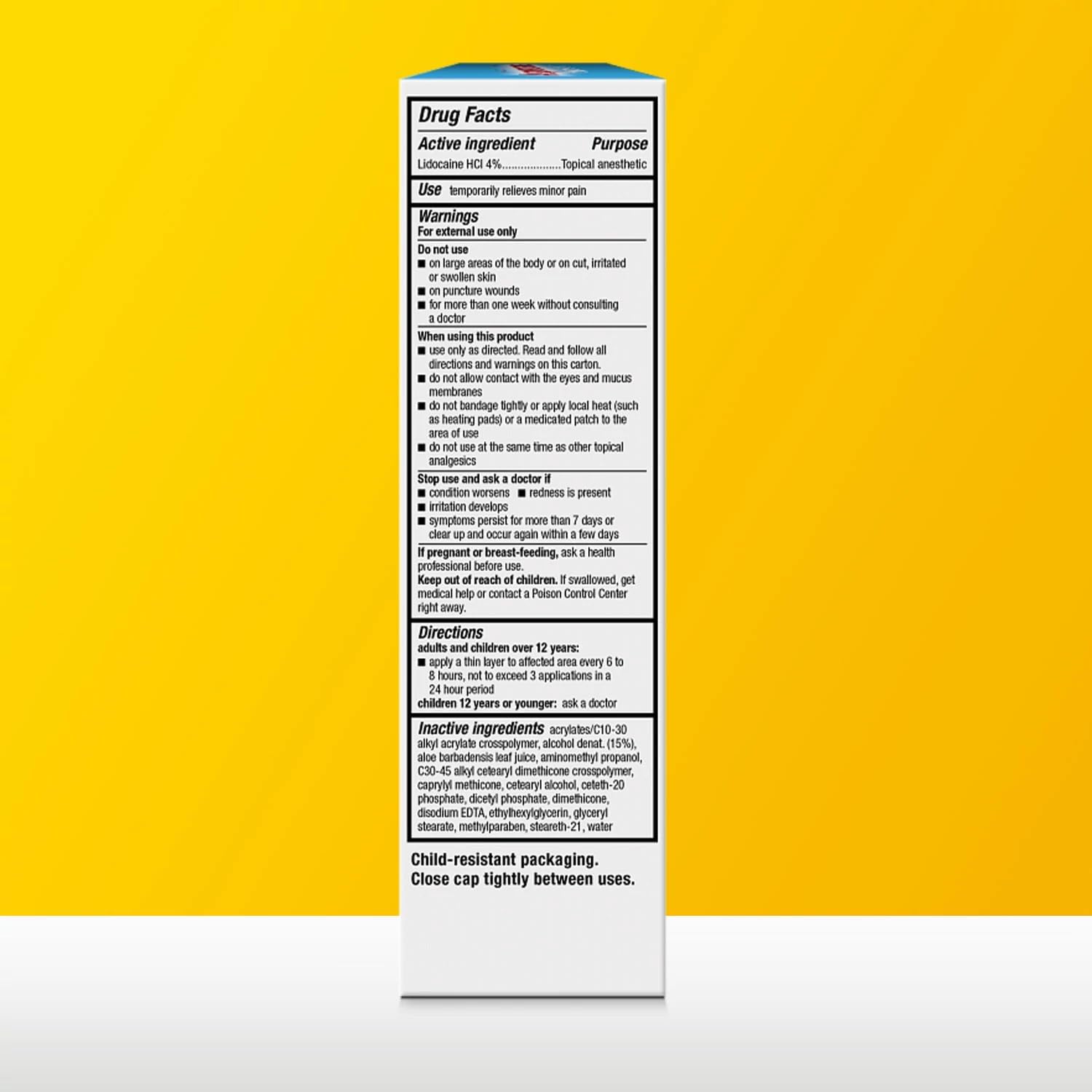
If you’ve ever stood in a pharmacy aisle holding two tubes of lidocaine cream — one labeled 4%, one labeled 5% — you’ve probably wondered whether that single percentage point is worth the price difference or just marketing noise. Lidocaine is a local anesthetic, meaning it temporarily blocks the nerve signals that your skin sends to your brain to say “that hurts.” It’s the active ingredient behind a wide range of OTC numbing products used for everything from minor burns and insect bites to post-waxing soreness and needle-site prep. The 4% and 5% concentrations are the two tiers the FDA has cleared for over-the-counter topical use in the United States, and they are not interchangeable in every context. This guide breaks down when the difference matters, how format — cream, gel, patch, spray — changes the equation, and which combination actually fits your specific application, so you can stop guessing and start buying with confidence.
Why Concentration Isn’t the Whole Story
The instinct to default to the higher number — “5% is stronger, so it’s better” — is understandable but incomplete. According to the National Institutes of Health National Library of Medicine, in the StatPearls chapter “Pharmacology, Local Anesthetics” by Munjal and Kaufman (updated 2024), the clinical effect of a topical anesthetic depends on three interacting variables: the concentration of the active molecule, the vehicle (the cream, gel, foam, or patch base that carries it), and the barrier properties of the skin at the application site. Change any one of those and you change the effective dose delivered, independent of what the label says.
What this means practically:
- A 5% lidocaine in a thick, occlusive ointment base may deliver less active ingredient per unit time than a well-formulated 4% cream with penetration enhancers, because the ointment slows drug release.
- Thinner skin — inner wrist, face, genital mucosa — absorbs topical lidocaine more readily than callused plantar skin or the outer thigh. The same product behaves differently on different body regions.
- Moisture, occlusion (covering the site with wrap or clothing), and time-on-skin all amplify absorption, which matters both for efficacy and for safety.
Pharmacy Times, in its overview “Topical Anesthetics: What Pharmacists Need to Know” (2023), reinforces this point: practitioners who choose products based on concentration alone, without factoring in vehicle and site anatomy, often under- or over-deliver analgesia and then attribute the failure to the product category rather than the formulation mismatch.
So before you pick a concentration, you need to pick a format. That’s the decision architecture this guide follows.
Format First: Matching Delivery Vehicle to Application Site
Cream and Lotion Formats
Cream is the workhorse format for lidocaine OTC products. The oil-in-water emulsion base spreads easily, absorbs within a 20–30 minute window consistent with the FDA OTC Monograph M020 dwell-time guidance for external analgesics, and leaves minimal residue. Creams are the right format when:
- The target area is broad and irregular — lower back, shoulder girdle, post-wax skin across a limb segment
- You need to cover a wound margin or abraded area where a patch won’t conform
- The patient or client will be applying it themselves without supervision
4% cream is the dominant concentration in this format category because most cream vehicles are formulated to hit therapeutic depth within the standard dwell time at that load. Aggregated practitioner feedback consistently notes that onset in 4% lidocaine creams is reliable at 20–25 minutes under non-occlusive conditions and does not require the heavier application volume that 5% ointment-base products often call for.
5% cream does exist — several compounding-adjacent brands market it OTC — but is more commonly encountered in ointment or gel forms. When 5% does appear in a cream vehicle, the incremental benefit over 4% is modest on intact skin and more meaningful on mucous membranes or thin periorbital skin, sites where a dermatologist or aesthetician, not a first-aid user, is typically supervising application.
Patch and Film Formats
Patches solve a specific problem: they deliver a consistent, measured dose over time without requiring reapplication, and they occlude the site automatically, boosting penetration. The tradeoff is conformability — a flat patch doesn’t wrap a knee or a curved muscle belly cleanly, and adhesive can irritate already-compromised skin.
Lidocaine patches available OTC in the U.S. are capped at 4%; per the FDA OTC Monograph M020 for external analgesics, the 4% patch format is indicated for minor pain of intact skin. The 5% Lidoderm patch is a separate prescription regulatory category and is outside the scope of OTC purchasing decisions. In athletic training and physical therapy settings, patches work best for focal, planar sites — lumbar erectors, mid-trapezius, knee medial collateral ligament area — and underperform on joints with high range of motion such as the shoulder or ankle, because flexion breaks the adhesive seal.
Gel and Spray Formats
Gels are the preferred format for mucous membrane applications — oral, nasal, urethral — because they stay in place better than creams and don’t spread uncontrolled the way aqueous solutions do. According to the Drugs.com lidocaine topical monograph (reviewed 2025), viscous lidocaine gels are the standard preparation for oropharyngeal and procedural mucosal anesthesia, though the OTC 4% segment does include some gels marketed for dermal use.
Sprays are fast-application formats suited for large surface areas where rubbing-in is not practical — burned skin, post-procedure fields, or rapid pre-procedure prep in a high-volume clinic setting. The Mayo Clinic’s patient information page for Lidocaine (Topical Application Route) advises caution about overuse of spray formats precisely because it is easy to apply more than intended, making dose control less precise than with cream or patch vehicles.
The 4% vs. 5% Decision: When the Number Actually Matters
Here’s the honest answer to the title question: for most OTC topical applications on intact skin, 4% and 5% lidocaine in equivalent vehicles produce clinically similar outcomes. The incremental 1% does not cross a pharmacological threshold that changes the experience for most users.
That said, there are specific scenarios where 5% earns its premium — and the comparison below is organized around the three purchasing tiers most buyers actually occupy.
Budget-Tier Use Case: Broad-Area Intact-Skin Soreness
For buyers managing general muscle soreness, minor burns, insect bites, or post-wax irritation across a broad skin area, a 4% lidocaine cream is the correct call. The concentration is appropriate for the application, the vehicle is optimized for spread over irregular surface contours, and the cost-per-application is the lowest of any format in this category. There is no clinical justification for paying the 5% premium when the skin barrier is normal and the treatment area is large.
Aspercreme
$7.48
In stock on Amazon
Check price on AmazonMid-Tier Use Case: Pre-Procedure or Focal-Site Applications
For buyers prepping a specific site for a needle procedure — venipuncture, injection, tattooing — or managing post-laser or post-wax discomfort on thinner skin such as the inner arm, face, or décolletage, the choice between 4% and 5% becomes genuinely meaningful. On thinner skin, the stratum corneum offers less diffusion resistance, and the modest concentration advantage of 5% translates into faster or deeper onset. A 5% cream or gel with 30–45 minutes of dwell time is a reasonable upgrade over 4% in this context. The Munjal and Kaufman StatPearls chapter on local anesthetic pharmacology notes that on skin with reduced keratinization, higher concentrations reach therapeutic depth more consistently within a fixed time window.
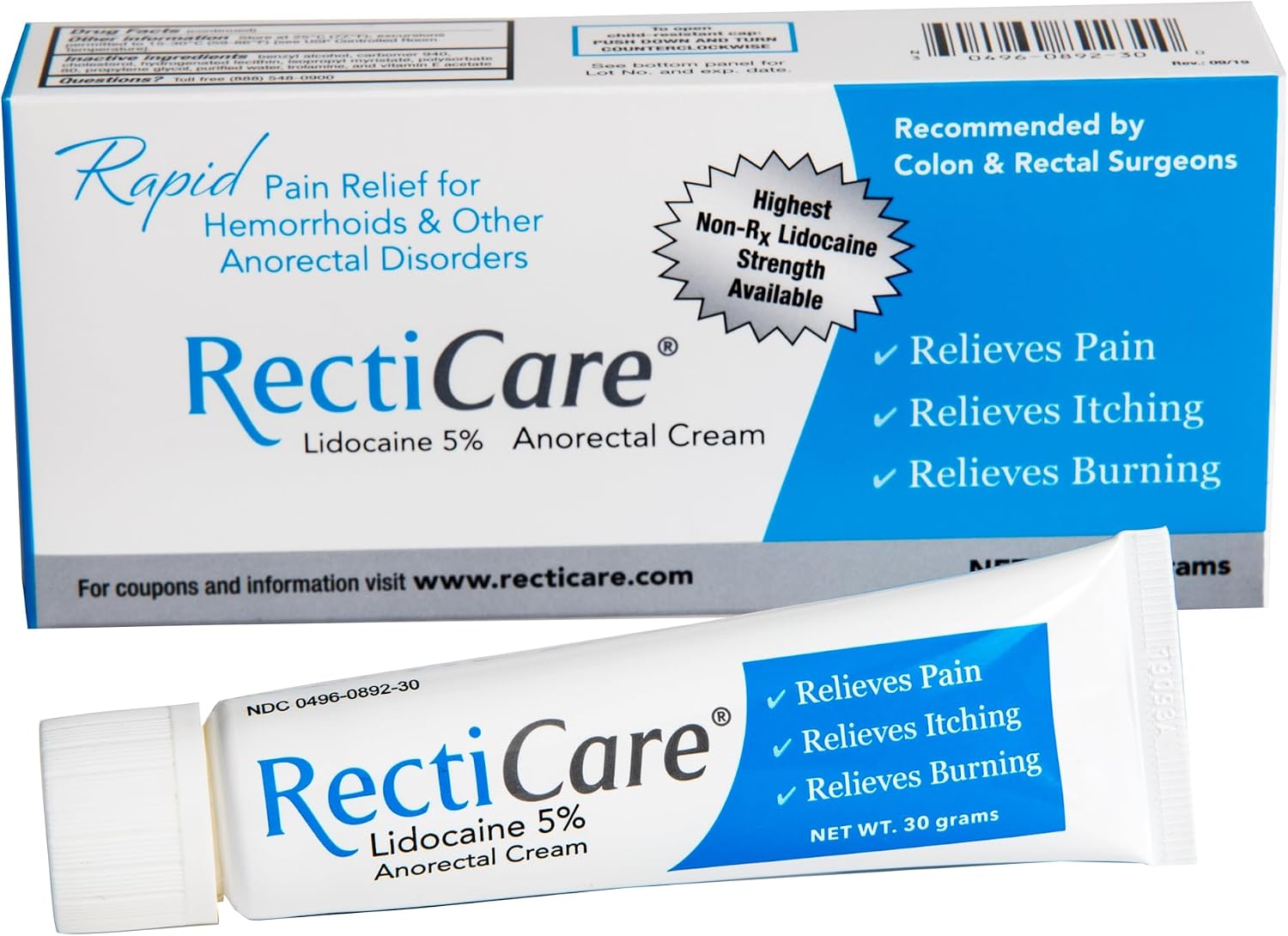
RectiCare
$24.89
In stock on Amazon
Check price on AmazonPremium-Tier Use Case: Keratinized or High-Resistance Skin Sites
The one use case where reaching for 5% over 4% has the clearest physiological support is highly keratinized skin — plantar fascia, callused heel, heavily calloused hand. According to the NIH StatPearls pharmacology review, the stratum corneum on these sites acts as a significant diffusion barrier. Higher concentration and occlusion together are required to achieve therapeutic depth. A 5% cream or gel applied under occlusive wrap for 30–45 minutes is the appropriate formulation choice here, and the price premium is justified by the pharmacological reality of the site. For practitioners managing chronic neuropathic pain at supervised depth, the Drugs.com lidocaine topical monograph notes that prescription 5% patch formats (outside the OTC tier) are the evidence-supported choice, and that decision belongs with a prescribing clinician.
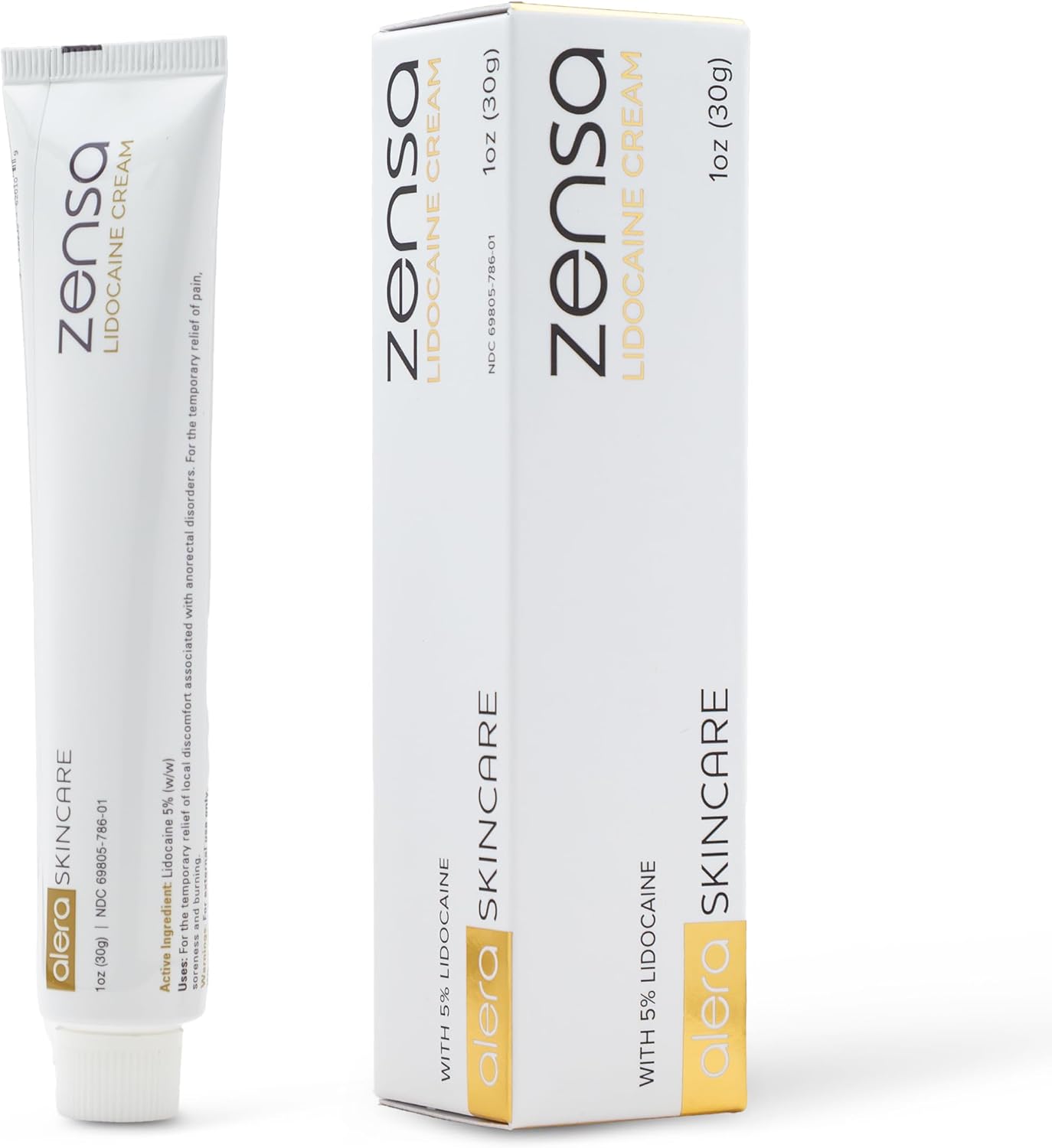
Zensa
$35.99
In stock on Amazon
Check price on AmazonCost-Per-Application: Running the Math
This is where practitioners managing clinic supplies or bulk purchasing for a small practice make or lose value. The price premium for 5% over 4% is real, and the per-application cost diverges more than the shelf price suggests.
Representative pricing (May 2026 market reference):
- 4% lidocaine cream, 30 g tube: approximately $14–$18 retail; roughly 60 applications at a standard 0.5 g per application = $0.23–$0.30 per application
- 5% lidocaine cream, 30 g tube: approximately $22–$28 retail; same application volume = $0.37–$0.47 per application
- 4% lidocaine patch, 18-count box: approximately $24–$32; one patch per application = $1.33–$1.78 per application
For a physical therapy office running 20 applications per week, the cream-versus-cream differential is roughly $14–$35 per month — meaningful over a year, but not a budget-breaker if clinical indication favors 5%. The patch premium compounds fast: that same 20-application weekly volume at patch pricing runs $1,400–$1,850 per year versus $240–$310 for cream. Pharmacy Times, in its topical anesthetics overview (2023), notes that clinic buyers who standardize on a single 4% cream for general use and stock patches only for lumbar and cervical focal-site protocols report the best balance of cost control and clinical flexibility.
Safety Boundaries and When to Escalate
The FDA OTC Monograph M020 establishes application limits for topical lidocaine for a reason: systemic lidocaine toxicity, while rare with proper OTC use, is a real pharmacological risk with high-dose, large-area, or occluded application. The Mayo Clinic’s patient information page for Lidocaine (Topical Application Route) identifies the following as situations requiring physician involvement before using any OTC lidocaine product:
- Application to broken, infected, or severely inflamed skin, where absorption is dramatically increased
- Use in children under 2 years, where weight-adjusted dose thresholds are much narrower
- Application to large body surface areas simultaneously
- Concurrent use with other amide-class local anesthetics or antiarrhythmic medications
- Any cardiac history, liver disease, or known lidocaine sensitivity
For practitioners: if a client reports dizziness, ringing in the ears, unusual taste, or confusion after topical lidocaine application, these are early systemic toxicity signals. Remove the product, position the person lying down, and escalate to emergency care if symptoms do not resolve promptly. This scenario is uncommon with correctly applied OTC doses but is not theoretical — documented cases involve overuse on abraded skin or under unintended occlusion.
The Decision Rule
Here’s the if/then framework distilled from the comparison above:
- Broad-area, intact, non-calloused skin: use 4% cream. Correct vehicle for the job, lowest cost-per-application at any purchase volume. Aspercreme — $7.48
- Thin skin, pre-procedure prep, or post-laser/wax on face or inner arm: 5% cream or gel with 30–45 minutes dwell time. The modest premium is justified by the pharmacological advantage on low-resistance skin. RectiCare — $24.89
- Highly keratinized sites — heel, sole, heavily calloused hand — or focal planar pain requiring hands-free sustained delivery: 5% cream under occlusion, or a 4% patch for the focal-planar case. Budget the patch’s per-application cost honestly before committing at volume. Zensa — $35.99
- Mucous membrane sites or chronic neuropathic pain: you are past the OTC decision tier. The appropriate next step is a conversation with a prescribing clinician about prescription 5% patch or compounded formulations, per the Drugs.com lidocaine topical monograph guidance.
One percentage point. Three meaningfully different purchasing tiers. The number on the label is only the beginning of the formulation story — the vehicle, the site anatomy, and the dwell time write the rest of it.