You’re standing at the pharmacy shelf — or more likely staring at a bulk-purchase screen — looking at Voltaren Arthritis Pain Gel next to a store-brand or third-party generic that lists the exact same active ingredient: diclofenac sodium 1%. Diclofenac (die-KLOE-fen-ak) is a nonsteroidal anti-inflammatory drug, or NSAID — the same class as ibuprofen, but formulated to work through the skin rather than the stomach. The “1%” tells you how much of that drug is packed into every gram of gel. Both products use the same number. Yet the brand can cost two to three times more per ounce. This guide breaks down whether that gap is justified, what the inactive ingredients actually do, and how to run the cost-per-dose math your supplier invoice demands before you stock a clinic or training room.
The Active-Ingredient Panel Is Not the Whole Story — But It’s Most of It
Let’s start with what the FDA actually regulates. Per the U.S. Food and Drug Administration’s OTC monograph framework and the original prescription approval for diclofenac sodium topical gel, a product labeled “diclofenac sodium 1% gel” must deliver 10 mg of diclofenac sodium per gram of gel. That is a hard specification. Voltaren meets it. Every FDA-approved generic meets it. If a product carries that label and cleared the FDA’s approval process, it is bioequivalent to the reference listed drug (Voltaren) by legal definition.
The FDA’s generic drug approval pathway requires bioequivalence testing — meaning the generic must show that its active ingredient reaches the same tissue concentrations at the same rate as the brand. Per published FDA guidance on topical NSAID approvals, “bioequivalent” for a gel means the same absorption profile, not just the same label claim. So when a generic diclofenac 1% gel carries FDA approval, you are not guessing about efficacy parity — you have regulatory confirmation.
This is the single most important frame for a practitioner buyer: if it’s FDA-approved generic diclofenac 1%, it works the same.
Where the comparison genuinely gets complicated is in the inactive ingredients — the vehicle that carries the drug through skin — and in real-world factors like dispensing consistency, packaging durability, and supply-chain reliability for bulk orders.
Inactive Ingredients: What Actually Differs Between Voltaren and Generics
Voltaren’s published inactive ingredient list, as documented in the product labeling reviewed by Drugs.com in their diclofenac topical drug information entry, includes isopropyl alcohol, propylene glycol, carbomer 974P, diethylamine, mineral oil, and purified water. That combination creates the gel’s characteristic consistency and helps drive diclofenac through the stratum corneum — the skin’s outer barrier layer.
Generic formulations are not required to use identical inactive ingredients — only to prove equivalent drug delivery. In practice, most major generic manufacturers use very similar carbomer-based vehicles. However, you may notice differences in:
- Gel texture and spreadability. Some generics run slightly thinner or thicker, which affects how much product a practitioner or patient actually applies per dose.
- Skin feel after application. The alcohol content varies slightly; higher-alcohol generics can feel drier or produce more residue.
- Fragrance and colorants. Voltaren is fragrance-free. Some off-brand generics are not — an important flag for athletic training rooms and pediatric or sensitive-skin populations.
- Preservative systems. Worth reading if you’re stocking for clients with known contact sensitivities.
Per the Drugs.com diclofenac topical overview, inactive ingredient differences rarely affect clinical outcomes in healthy adult populations, but can matter for patients with sensitive skin or multiple chemical sensitivities.
The practitioner takeaway: pull the full label on any generic you’re evaluating. The active-ingredient column is a given; the inactive column is where you do your due diligence.
Cost-Per-Dose Math, Format Trade-offs, and Brand Value: A Three-Level Comparison
The following three subsections walk through each tier of buyer scenario — from high-volume clinic purchasing to individual patient recommendation — so you can match the right product to the right context.
Budget-Tier Scenario: High-Volume Clinic and Training Room Buying
Here’s where bulk buyers earn their margin clarity.
By the numbers (2026 retail and distributor estimates):
| Format | Approximate retail price | Grams | Approx. cost per gram |
|---|---|---|---|
| Voltaren 150g (retail tube) | $32–$38 | 150 g | $0.21–$0.25/g |
| Generic diclofenac 1% 100g (pharmacy brand) | $14–$18 | 100 g | $0.14–$0.18/g |
| Generic diclofenac 1% 300g (distributor/clinic pack) | $28–$36 | 300 g | $0.09–$0.12/g |
The FDA-approved dosing for knee osteoarthritis, as documented in Mayo Clinic’s diclofenac topical route prescribing reference, is 4 grams per application site, four times daily — 16 grams per day per patient.
At the 150g Voltaren retail price, one patient’s daily supply costs roughly $3.36–$4.00. At the 300g distributor-pack generic, that same day costs $1.44–$1.92. Over a 12-week clinical course — a common OA management window — the delta is $100 to $175 per patient. For a physical therapy office managing 15 chronic-pain clients, that math justifies a supplier contract conversation immediately.
Per Pharmacy Times’ practitioner counseling guidance on OTC topical NSAIDs, proper dosing adherence is one of the primary failure modes for topical diclofenac — patients and untrained aides routinely apply too little. Standardizing on a single format and coaching on the 4-gram measure does more for outcomes than brand selection.
 product image](/images/external/68ddd6e3e05f.jpg)
HealthCareAisle NSAID
$8.02
In stock on Amazon
Check price on AmazonMid-Tier Scenario: Mixed-Use Practices and Fragrance-Sensitive Populations
Not every buying context rewards the cheapest-per-gram calculation. Mid-tier buyers — outpatient rehab clinics, school athletic departments, integrative medicine offices — face a more nuanced decision matrix.
Format considerations at this tier:
Tubes (the standard retail format for both Voltaren and most generics) are intuitive but notoriously hard to dose consistently. Squeezing 4 grams from a tube without a scale requires calibration most users never develop. They are best for individual home users who self-apply.
Pump dispensers (offered by Voltaren in some markets) deliver a measured volume per press — a meaningful advantage for training rooms and clinic settings where multiple practitioners apply gel to multiple patients across a shift. Fewer variables, less waste, easier compliance tracking.
Tubs or jars (found in some generic bulk formats) allow easy access for gloved application by aides and trainers but carry contamination risk if not handled carefully. For clinical settings with proper glove protocols, tubs are the highest-value format per dose.
Per Mayo Clinic’s topical route description for diclofenac, application by hand — with or without gloves — and the 4-gram dose measurement are consistent across all package formats. The format choice affects usability, not pharmacology.
For fragrance-sensitive or chemically sensitive populations, Voltaren’s confirmed fragrance-free inactive profile has real value at this tier. Verifying the inactive panel on any generic before committing is non-negotiable for post-surgical patients, pediatric athletes, or clients with eczema or contact dermatitis histories.
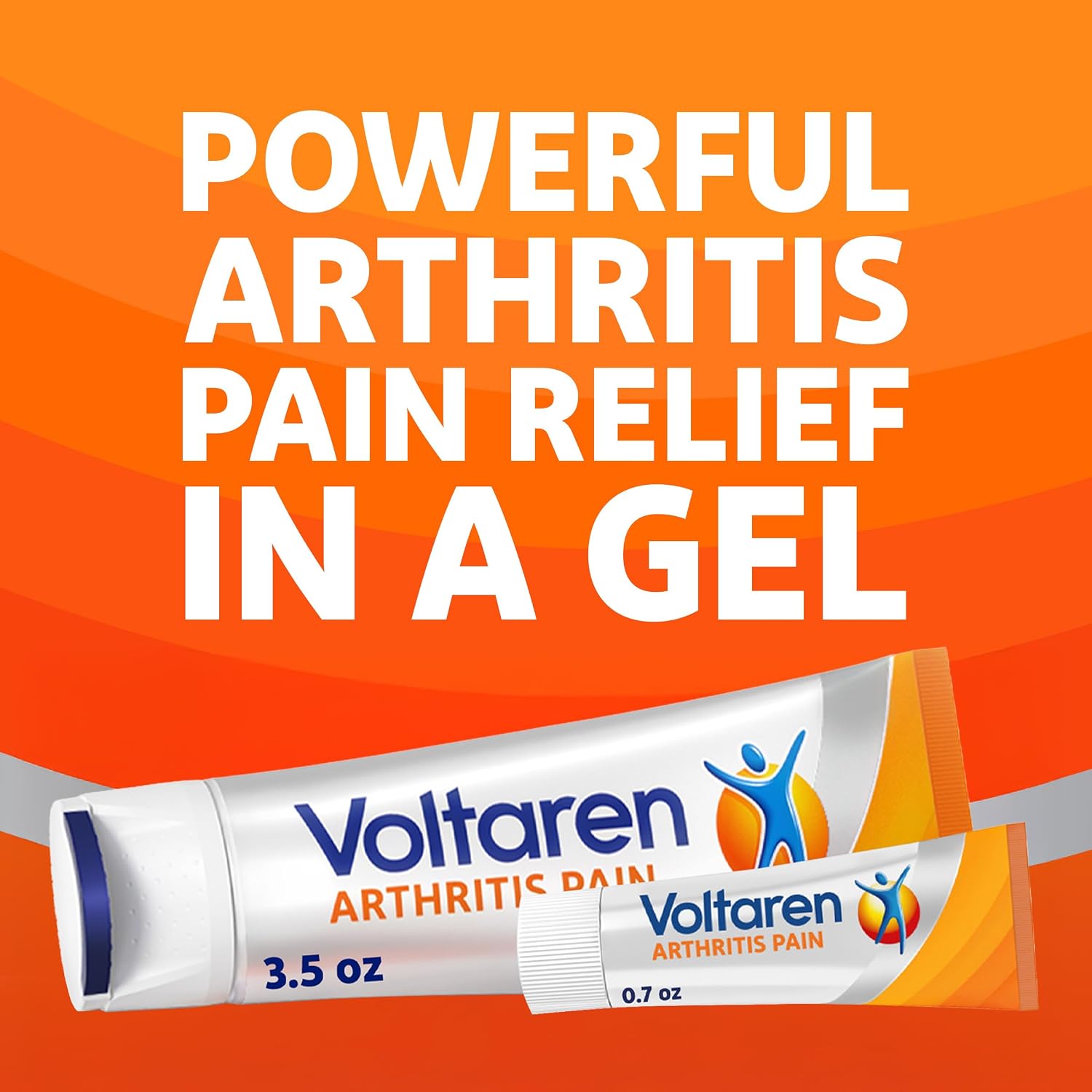
Voltaren
$23.29
In stock on Amazon
Check price on AmazonPremium-Tier Scenario: Patient-Facing Recommendation and Caregiver-Administered Dosing
Being honest here matters more than reflexive generic advocacy. There are real scenarios where paying the Voltaren markup is defensible.
1. Patient and caregiver familiarity. Home health aides and caregivers who’ve been trained on Voltaren specifically — its pump mechanism, its dispenser markings, its tube ergonomics — will dose more consistently than when handed an unlabeled generic tub. Consistency of application is a legitimate clinical variable, not a marketing abstraction.
2. Supply-chain reliability for smaller buyers. Boutique fitness studios and school nurses who order one or two units at a time face a different calculus than PT clinics. At that volume, Voltaren’s consistent retail availability across pharmacy chains beats the logistics friction of sourcing a distributor-pack generic.
3. Product returns and patient trust. In client-facing practices where you’re recommending a product a client will buy at retail, brand recognition reduces friction. A patient who sees an unfamiliar label may use the product incorrectly, inconsistently, or not at all. Voltaren’s consumer marketing investment has done the awareness work; most generic brands have not.
A 2021 meta-analysis indexed on NCBI PubMed — reviewing topical diclofenac efficacy across branded and generic formulations for osteoarthritis — found consistent outcomes when dosing protocol was controlled. The primary driver of outcome variance was application consistency, not formulation source.
HealthCareAisle NSAID
$27.99
In stock on Amazon
Check price on AmazonThe “When to See a Doctor” Line
This section earns its place in every diclofenac buying guide, even a practitioner-level one.
Topical diclofenac 1% is approved OTC for adults with osteoarthritis pain in specific joints — hands, wrists, elbows, feet, ankles, and knees. Per the U.S. Food and Drug Administration’s OTC labeling requirements for diclofenac sodium topical gel, users should not apply to more than two body areas simultaneously, and should stop use and consult a physician if pain worsens or does not improve within 21 days.
The product is not a first-line treatment for acute soft-tissue injuries, systemic inflammation, or pain of unknown origin.
For athletic trainers and fitness studio buyers specifically: diclofenac gel is not the same as a topical analgesic — menthol-based counterirritant products like Biofreeze work through a completely different mechanism. Diclofenac is an anti-inflammatory. Using it the way you’d use a counterirritant — liberally, frequently, across large muscle groups — is outside the approved indication and may introduce systemic NSAID exposure concerns. Per Pharmacy Times’ OTC topical NSAID counseling guidance, practitioners should flag this distinction clearly when establishing any bulk purchase and application protocol. Confirm scope-of-use boundaries with your clinical advisor before stocking.
Spray formats are not currently available for FDA-approved diclofenac 1% gel — this distinguishes the category from some other topical NSAIDs. If you encounter a spray claiming diclofenac 1% equivalence, verify FDA approval status before stocking.
The Decision Rule
If you’ve made it this far, here’s the clean if/then frame:
If you’re buying for a clinic, PT office, or training room at volume, and your supplier offers an FDA-approved generic diclofenac 1% gel in a format that fits your application protocol — then buy the generic, negotiate the 300g distributor pack, and put the margin difference into dosing education.
If you’re recommending a take-home product to a caregiver or patient who will be self-dosing without supervision, and brand familiarity reduces the risk of under-application — then Voltaren’s premium is a compliance investment, not a marketing tax.
If you’re stocking for a fragrance-sensitive or chemically sensitive population at any volume — then verify the inactive panel on any generic before committing, and default to Voltaren until you’ve confirmed a fragrance-free alternative.
The active-ingredient panel tells you the drugs are equivalent. The rest of the label, the format, and the buying context tell you which equivalent product is right for your specific practice.