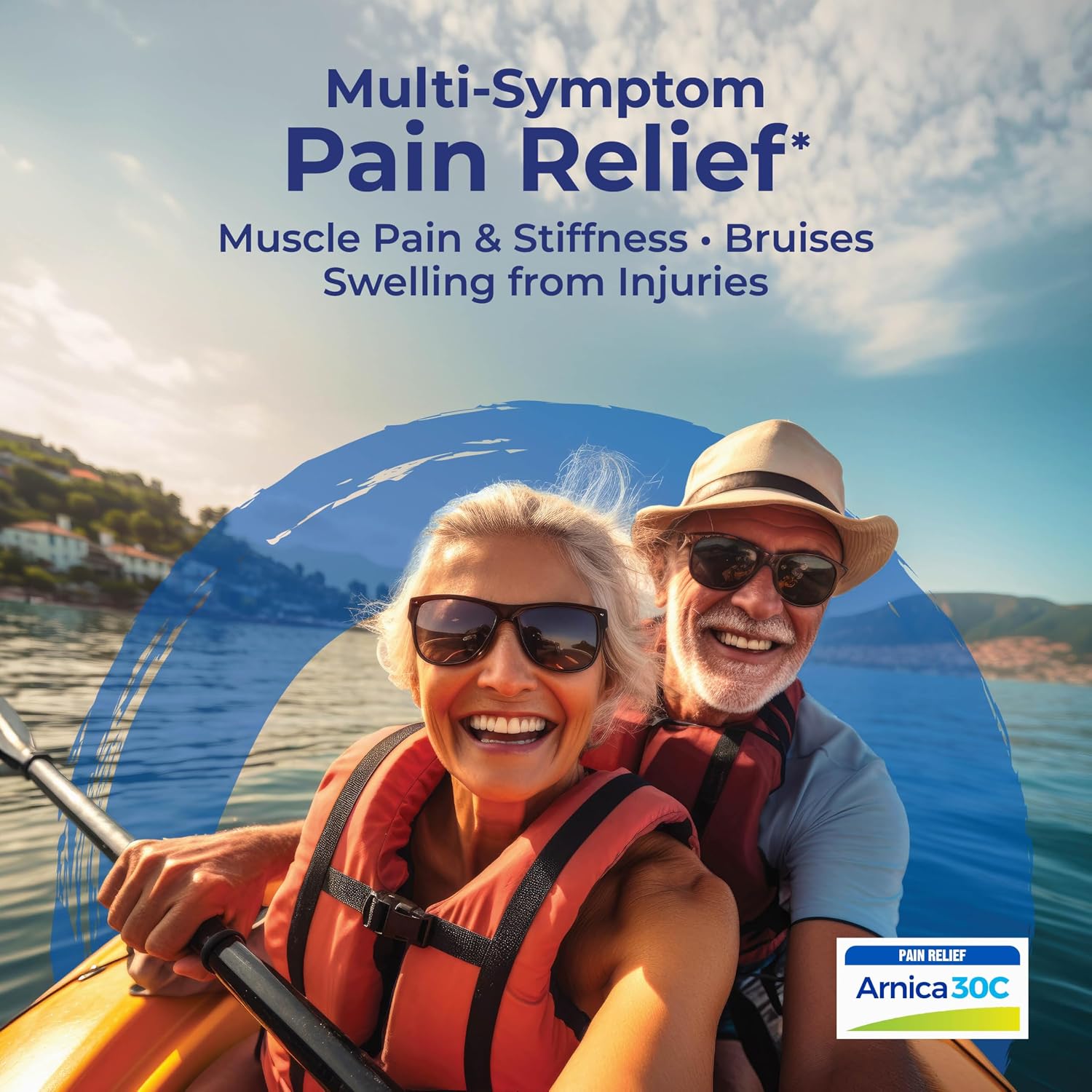
Arnica is one of those ingredients that shows up everywhere in the sports-recovery and bruise-care aisle — on the shelf at your local pharmacy, in the kit bags of athletic trainers, and in the checkout cart of parents who swear by it after their kid takes a spill. If you haven’t encountered it yet, here’s the quick version: arnica is a plant in the daisy family (Arnica montana), and preparations made from its flowers have been used for centuries to reduce bruising, swelling, and muscle soreness when applied to the skin. Today it’s sold as gels, creams, and ointments under names like Arnicare and Boiron, marketed primarily for bruise reduction and minor muscle pain. The central question — the one you actually need answered before stocking your kit or advising a client — is how much of that reputation is backed by solid clinical evidence, and how much is brand story. This guide gives you the honest breakdown, format by format and claim by claim.
The Evidence Landscape: What Arnica Topicals Can (and Cannot) Do
The most important thing to understand about the arnica evidence base is that formulation matters enormously, and most consumer-facing marketing glosses right over that distinction.
There are two fundamentally different categories of “arnica” products on the market:
-
True herbal extracts — products containing a standardized concentration of Arnica montana flower extract (often expressed as D1 or a specific percentage of extract relative to solvent). These are where the credible clinical evidence, thin as it is, actually lives.
-
Homeopathic arnica dilutions — products labeled with potencies like “6C,” “30C,” or “HPUS.” At these dilution factors, the finished product contains no detectable molecules of arnica whatsoever. This is not a fringe claim; it is basic chemistry, and it is confirmed by the European Medicines Agency’s assessment report on Arnica montana preparations, which distinguishes sharply between herbal medicinal products and homeopathic preparations.
When you see a 2024 meta-analysis or trial that shows a positive signal for arnica topicals, almost invariably it involves the herbal-extract category at meaningful concentrations — not the homeopathic line. This distinction is the single biggest source of confusion in how these products get discussed in training rooms and clinics, and it’s worth naming explicitly every time you recommend or stock an arnica product.
What the herbal-extract evidence actually says:
- A Cochrane-adjacent review (Widrig et al.) comparing topical arnica gel to ibuprofen gel for osteoarthritis of the hand found comparable outcomes on pain and function scores at four weeks. That’s a real signal, but notice the comparison: arnica performed similarly to a low-dose ibuprofen gel, not dramatically better than placebo in isolation.
- Studies on bruise resolution — particularly post-surgical and post-cosmetic-procedure bruising — show modest acceleration in bruise clearance with herbal arnica preparations compared to placebo. The effect sizes are generally small to moderate. The NCCIH’s herb overview notes the evidence is “promising but not definitive” for bruising and soft-tissue trauma.
- For acute muscle soreness (DOMS — delayed onset muscle soreness, the stiffness you feel 24–48 hours after hard training), the evidence is weaker. Ernst and Pittler’s peer-reviewed review in the Journal of the Royal Society of Medicine found no consistent benefit for arnica across muscle-soreness studies when methodological quality was controlled.
The honest summary: Herbal arnica extract at meaningful concentrations has a plausible mechanism (helenalin, the primary sesquiterpene lactone, has demonstrated anti-inflammatory activity in vitro) and modest clinical support for bruising and possibly mild arthritic joint pain. The evidence does not support the broader marketing language of “powerful muscle recovery” or “deep tissue relief.” Homeopathic arnica products are trading entirely on the plant’s herbal reputation — the active is not present.
Format Trade-offs: Gel vs. Cream vs. Ointment
Before you pick a brand, pick a format. The delivery vehicle changes both the experience and, in all likelihood, the absorption characteristics of the active.
Gel is the dominant format for arnica and the one most supported by the clinical literature. The water-based, fast-absorbing texture makes it practical for application over large muscle groups and joints. Gels typically dry quickly, don’t leave residue on clothing or equipment, and are well-tolerated even on mildly irritated skin. For athletic trainers and physical therapy offices applying to elbows, knees, and ankles multiple times per session, gel is almost always the right call.
Cream is a middle ground — more emollient than gel, appropriate where the skin is dry or when the patient needs some moisturization alongside the active. Post-bruising skin around the face or forearms where dryness is a factor responds well to cream. Slightly slower absorption; slightly more residue. Fine for home use, less ideal for high-throughput clinic settings.
Ointment is the least common arnica format and generally the least necessary. The occlusive base doesn’t offer any obvious pharmacokinetic advantage for an anti-inflammatory applied to intact skin, and the greasy feel reduces compliance, especially for athletes. Ointment formats make more sense for actives that genuinely benefit from occlusion (like thick urea or zinc oxide preparations); arnica isn’t one of them.
Spray exists in a small number of arnica products. Convenient for self-application to hard-to-reach areas (upper back, shoulder), but concentration consistency across a spray application is harder to control than a gel, and most sprays are alcohol-based, which can sting on broken or post-procedure skin. Not a front-line format for clinical use.
By the Numbers
| Format | Typical Arnica Extract Concentration | Average Cost per oz (retail, 2026) | Best Fit |
|---|---|---|---|
| Gel (herbal) | 7–10% A. montana tincture equivalent | $0.80–$1.40/oz | Athletes, clinic stock |
| Cream (herbal) | 5–7% | $1.10–$1.80/oz | Home use, dry skin contexts |
| Homeopathic gel/cream | 0% active molecules (6C–30C) | $0.60–$1.20/oz | Not evidence-supported |
| Ointment | 3–5% | $1.20–$2.00/oz | Niche, limited use case |
Cost estimates based on aggregated retail pricing across national pharmacy chains and online listings, May 2026.
Where the Marketing Runs Ahead of the Evidence
Dermatology Times has flagged the broader issue: botanical actives in OTC topicals are frequently marketed with claims that significantly outrun the available trial data, and arnica is one of the clearest examples. Here’s where to apply skepticism:
“Clinically proven to relieve muscle pain.” This language appears on several arnica products. The operative word is relieve — not eliminate, not treat. Even in the most favorable trials, arnica gel performs comparably to low-dose NSAIDs on mild pain, not comparably to prescription-strength anti-inflammatories. If you’re advising an athlete post-injury or a client with genuine soft-tissue damage, arnica is supportive at best. Diclofenac gel (Voltaren, now OTC) has a substantially stronger evidence base for musculoskeletal pain — that’s the comparison practitioners need to make.
“As effective as ibuprofen.” This claim, when it appears, almost always traces back to the Widrig osteoarthritis study. That study compared arnica gel to a specific ibuprofen gel preparation for hand OA. It did not establish parity with oral ibuprofen, systemic anti-inflammatories, or diclofenac gel. Context collapse between one narrow study and broad marketing language is the mechanism here.
Boiron Arnicare branding. Boiron is the largest global distributor of arnica topicals and is widely stocked. Their Arnicare gel line is homeopathic (30C). To their credit, the packaging does disclose the homeopathic designation and HPUS listing, but the shelf presence, name recognition, and sports-medicine adjacency of the brand creates significant implied-efficacy signaling. Practitioners stocking or recommending Boiron homeopathic arnica should understand they are working with a product that functions, at best, as a vehicle-only topical — any benefit is attributable to the massaging, the base cream, or the placebo effect, not to arnica itself.
This isn’t a reason to dismiss the Boiron line categorically if a patient finds it helpful and tolerates it well — but it’s a reason to be precise about why it might be helping and not to anchor clinical expectations on the label.
If-Then Decision Framework
This is the practical summary. If you’re building a kit, advising a patient, or deciding what to stock:
If the use case is bruise reduction after trauma or a procedure → Stock a herbal arnica gel at 7–10% extract (not homeopathic). The evidence for bruising is the strongest signal arnica has. Instruct application 2–3x daily to intact skin around (not over) open wounds.
If the use case is mild joint pain or hand osteoarthritis → Herbal arnica gel is a reasonable adjunct, especially for patients who are NSAID-intolerant or prefer botanical options. Frame it honestly as “comparable to low-dose ibuprofen gel” — not as a strong anti-inflammatory. Diclofenac gel remains the higher-evidence choice.
If the use case is DOMS or athletic muscle recovery → The evidence is weak. Arnica gel is not a first-line recommendation here. Cold therapy, compression, and time have better support. If a patient is already using arnica and finds it helpful, that’s not harmful — but don’t build it into a recovery protocol as though it has proven efficacy for this indication.
If you’re evaluating a homeopathic arnica product → Understand that the clinical evidence does not apply. You’re making a decision about a placebo-adjacent product. That may be clinically acceptable in certain low-stakes contexts, but don’t present it to patients as evidence-supported arnica treatment.
If cost-per-application is a factor for bulk clinic purchasing → Herbal arnica gels in 8–16 oz tubes run approximately $12–$22 for a 16 oz format at clinic pricing. At 2–3 applications per day per patient for a 1–2 week course, that works out to roughly $0.15–$0.35 per application — competitive with other botanical OTC topicals. The value case is reasonable; just ensure you’re buying herbal extract, not homeopathic dilution, at that price point.
The Bottom Line
Arnica topicals occupy a legitimate but narrow lane. The herbal extract has real anti-inflammatory compounds, a plausible mechanism, and modest clinical support for bruising and mild joint symptoms. The homeopathic versions, whatever their patient-satisfaction profile, are not delivering arnica pharmacologically. The marketing across both categories frequently overstates what the evidence supports.
For practitioners building honest, evidence-grounded protocols: herbal arnica gel has a place in your bruise-management toolkit. It does not have a place as a primary muscle-recovery agent or a substitute for higher-evidence topical NSAIDs where those are indicated. Know the formulation you’re buying, know what evidence actually sits behind it, and communicate both clearly to patients who ask.